My pothos needed water every ten days. That was the rigid rule I faithfully followed for years. Then the seasons flipped, and the exact same plant sitting in the identical spot started behaving completely differently. It required watering every five long, hot summer days, yet could stretch for three full weeks between drinks once winter settled in. The plant itself never changed one bit. Only the surrounding conditions shifted.
This vital piece of the puzzle is what most generic plant advice conveniently leaves out. Preprinted care tags crave tidy, fixed answers that are easy to read and share. They skip the critical detail that growth speeds up and slows down with the calendar, shifting every single watering requirement entirely. You would assume a short warning about seasonal changes would fit neatly on those small labels, yet it almost never appears.
A plant’s growth rate sets its watering pace far more than any written date on a schedule. Plants draw water to build fresh leaves and stems, and to replenish moisture lost through foliage. Cooler air and shorter daylight hours drastically reduce both processes. Soil that dries rapidly through June can remain damp deep into December simply because the root system consumes very little water at rest. I felt rather foolish once this truth finally clicked in my mind. For months, I kept watering strictly on my old summer routine out of pure habit. The soil never received enough time to dry out. Roots lingered trapped in oxygen-poor, perpetually soggy substrate, a situation that leads directly to root rot. The solution is not pouring smaller amounts of water each time. It means extending the gaps between watering sessions, and judging timing by touching the soil rather than blindly following a calendar.
Heating vents disrupt the balance once again. Warm forced air siphons humidity from the air and evaporates soil moisture far faster than still air inside an average room. A plant positioned near a radiator might need more frequent moisture checks even during slow winter growth. That observation highlights just how heavily location weighs on care. We can experience the exact same season indoors, yet plants in separate corners carry wildly different watering needs.
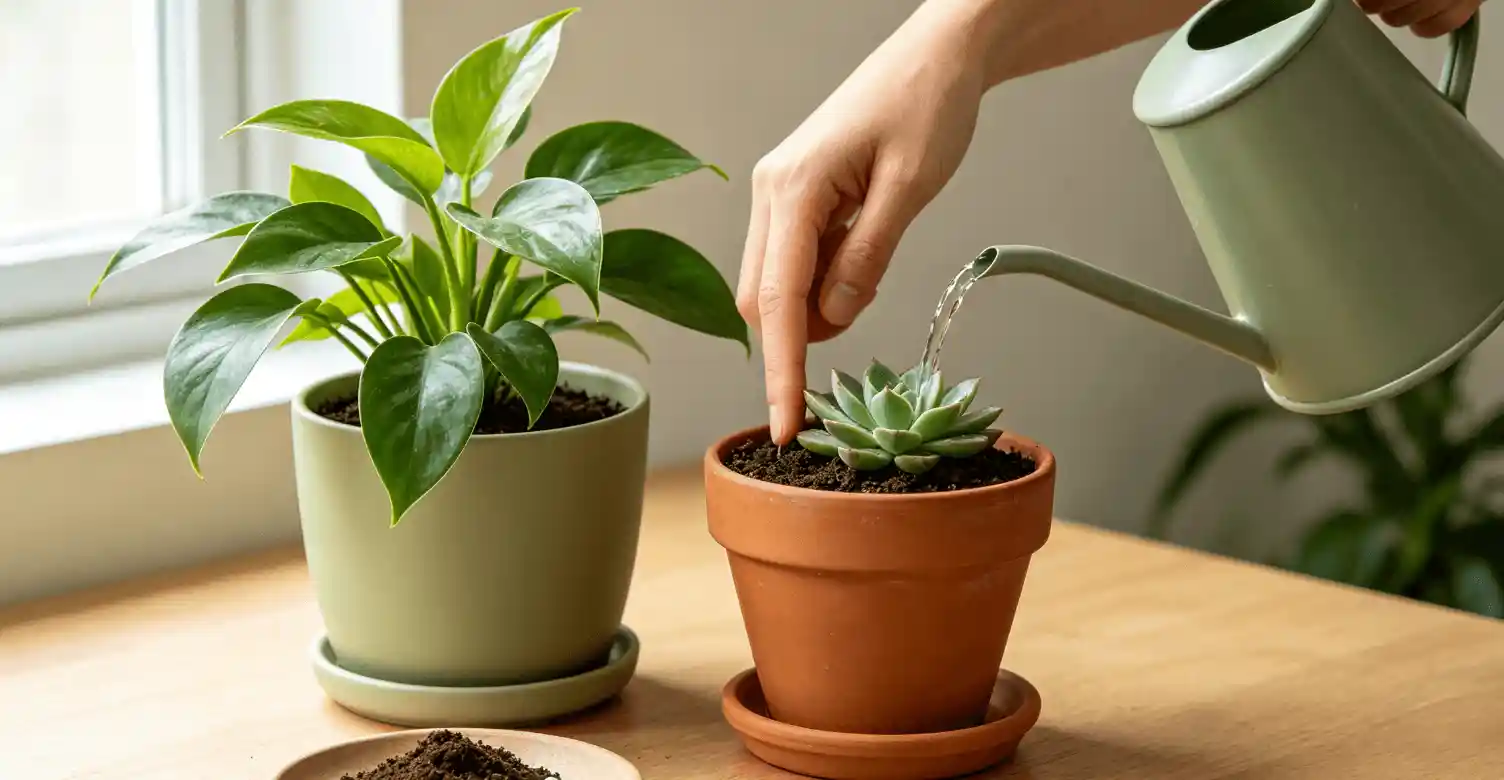
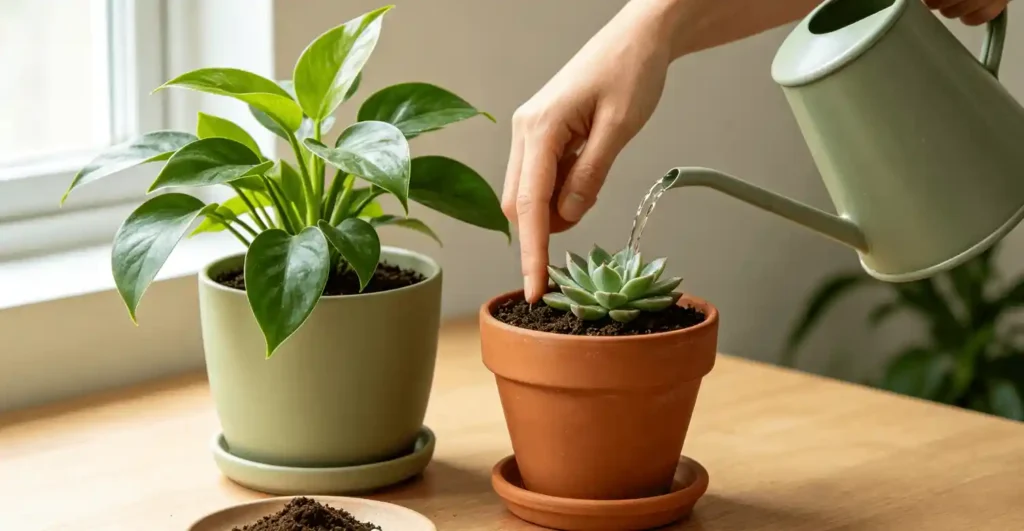
Container material rewrites the watering math as well. Unglazed terracotta clay breathes freely through its porous walls. The same houseplant placed in a plastic pot will retain moisture much longer, since no water escapes through the container sides. The rapid drying cycle of clay suits varieties that detest soggy roots. That same fast evaporation would dehydrate moisture-loving ferns too quickly to maintain steady health, making plastic a far better choice for them. Meanwhile, a succulent planted in sealed glossy ceramic risks sitting in damp soil long after it should have dried. None of this means one pot material is universally superior. You match your container choice to the plant’s natural preferences instead of picking purely based on how attractive it looks on a shelf.
Pot size confuses new growers more than most people anticipate. Small containers lose water quickly because there is limited soil to hold reserves. Larger pots store moisture for weeks, especially when roots have not yet expanded to fill all the available space. Repotting straight into an oversized vessel creates an extremely common beginner trap. All that extra unused growing medium stays damp, with almost no roots present to absorb excess water. These days I only size pots up by one or two inches in diameter. It grants roots space to spread gradually without creating persistent wet zones underground.
Every home builds its own unique indoor climate. Bright south-facing windows speed up evaporation far more than shaded north-facing corners, even when comparing plants inside a steamy humid bathroom. Drafty air vents and stuffy closed-off room corners each create their own moisture patterns. No watering schedule copied from a friend or online guide can perfectly account for your exact combination of light, temperature and airflow. Spend two weeks checking soil moisture every few days, pay attention to how quickly the medium dries, and your plant’s natural rhythm will slowly reveal itself. After observing multiple seasonal cycles, watering stops feeling like a stressful math equation. It evolves into quiet intuition that flexes automatically as indoor conditions shift.
One reliable habit stays consistent no matter the season, pot type or plant variety. Whenever watering time arrives, saturate the soil thoroughly all the way through. Allow excess liquid to drain fully out the bottom holes, and dump any leftover water collecting inside saucers. This single simple practice eliminates a large portion of timing guesswork and cuts down rot risk dramatically. Everything else falls into place as you patiently observe the unique microclimate inside your own home and learn to read the signals your plants send each day.