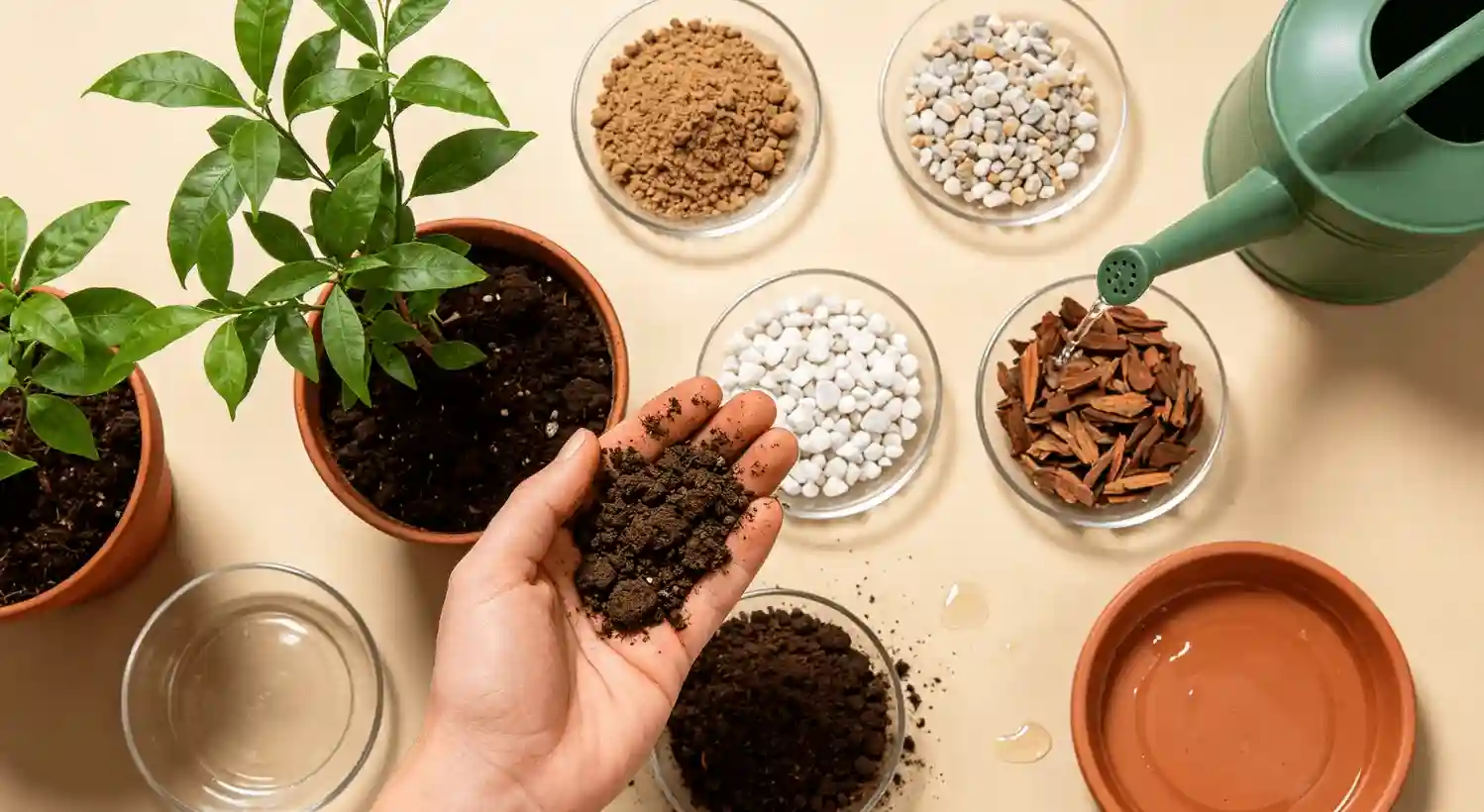
Spider plant tips turn brown in a line that’s almost too straight to be random. It’s such a specific, clean pattern that it’s easy to overlook at first, but once you notice it, you can spot the issue instantly on affected foliage. What stands out most is how this crisp browning damage lines up neatly across leaf after leaf, consistent across every mature frond on the entire plant. Most new plant owners automatically blame low humidity or inconsistent underwatering for this common issue. But those typical household stressors usually create patchy, uneven discoloration, not a perfectly uniform straight line. What’s more, this precise tip browning hits old and mature leaves just as hard as newer growth, which rules out ordinary seasonal stress or neglect. From what I’ve observed through years of troubleshooting, this distinct pattern points straight to your tap water chemistry, not your watering schedule or room environment. The frustrating part is countless hobbyists spend months chasing the wrong fixes, adjusting humidity levels, changing watering routines, or repotting repeatedly, all while the real problem goes completely unnoticed.
Most plant care advice fixates endlessly on watering frequency and volume, drilling into how often you water and how much liquid you pour into each pot. It treats all tap water as identical once it seeps into the soil, assuming consistent routine equals consistent plant health. For the majority of hardy houseplants, this logic holds true. Tough varieties can tolerate standard municipal tap water with zero issues, leaving no reason for casual growers to overthink their home plumbing or local water treatment systems. However, a specific group of sensitive houseplants react badly to the chemical makeup of tap water itself, and no amount of tweaking your watering rhythm, adjusting light, or boosting humidity can fix the underlying damage.
Chlorine and chloramine are the two most common culprits behind uniform tip browning. City water facilities add these disinfectants to eliminate harmful bacteria and keep public drinking water safe for human use. Most houseplants easily withstand the low concentrations found in residential tap water. Yet delicate species like spider plants, dracaenas, calatheas, and prayer plants slowly develop crisp, brown leaf edges with prolonged exposure. This chemical damage spreads evenly across foliage, rather than clustering on new growth or leaves near dry heating vents or drafty windows—a key detail that separates water chemistry damage from ordinary environmental stress. Regular chlorine dissipates easily if you let a water jug sit uncovered at room temperature for 24 hours, evaporating out before you use it on plants. Chloramine, however, is far more stable. Many cities have switched to chloramine for water treatment because it lasts longer in plumbing lines, and it will not evaporate on its own. In this case, a simple water filter becomes necessary. Checking your local utility’s water report will clarify exactly which disinfectant is used in your area, eliminating all guesswork.
Fluoride, sometimes added separately to public water supplies, creates an almost identical signature in these sensitive plants. It causes precise, symmetrical tip browning that looks far too uniform to result from general care mistakes. These plant species lack the ability to process and filter fluoride buildup, making them the classic textbook examples of fluoride-sensitive houseplants. This is why spider plants in particular are notorious for crisp brown tips even with perfect watering and light care.
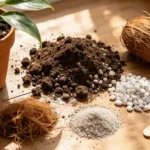
Hard water brings slower, more gradual long-term trouble. Extra calcium and magnesium minerals in hard water rarely cause sudden, dramatic plant decline. Instead, mineral salts accumulate slowly in potting soil over months of regular watering. You’ll notice white or gray crust forming along pot rims, atop the soil surface, or around drainage holes as the minerals build up over time. This steady buildup gradually alters soil pH, locking away essential nutrients and preventing plant roots from absorbing them properly. The result is subtle yellowing foliage or stunted, slowed growth that feels impossible to diagnose, with no obvious connection to light, water, or humidity issues. The biggest challenge with hard water mineral buildup is that it creeps up slowly, catching growers off guard.
Flushing your soil thoroughly every two months solves this issue easily. Give each plant a heavy, deep watering that flows freely straight out the bottom drainage holes, carrying excess built-up salts away with the runoff. There’s no need to waste money on permanent bottled water for your collection—it’s costly and entirely unnecessary for nearly all houseplants.
Whole-house water softeners create a unique opposite problem. These systems replace calcium and magnesium with sodium to soften water. While sodium levels remain low for human use, sodium steadily accumulates in potting soil over time. Plant roots cannot process sodium effectively, as houseplants never evolved to tolerate consistent sodium exposure the way they handle natural soil minerals. If your home uses a water softener, simply collect unsoftened tap water from an outdoor spigot or separate bathroom tap exclusively for your plants, no need to alter your home’s plumbing system.
Crucially, not every plant needs this extra level of water-focused care, and that’s an important detail to remember. Turning every watering session into a chemistry check will only burn you out unnecessarily. Hardy staples including pothos, philodendrons, snake plants, ZZ plants, and most succulents thrive on ordinary tap water, tolerating standard chlorine levels and moderate water hardness with ease.
Only a specific group of plants demands these small extra steps: spider plants, dracaenas, all calathea and prayer plant varieties, and several delicate ferns. Letting tap water sit overnight removes chlorine, while a basic pitcher-style filter eliminates chlorine, fluoride, and most chloramine. When available, collected rainwater is the ideal solution, completely free of man-made additives and mineral imbalances.
Learning to read these distinct visual patterns cuts out countless hours of wasted effort. Uniform straight-line browning on otherwise healthy foliage, especially on known sensitive species, is almost always water chemistry damage. True humidity deficits or underwatering create patchy discoloration, leaf drooping, and crinkled texture across entire leaves, not clean lined tips. White crusty residue on pots and soil is a dead giveaway for mineral buildup, unrelated to pests, light gaps, or airflow problems. Once you master these simple visual cues, you’ll stop chasing ineffective humidity fixes for issues a quick filter or soil flush can resolve instantly. I once struggled for months with a persistently browning spider plant, trying every care tweak possible, until I finally tested my tap water. Finding the simple chemical answer was such a huge relief, and it completely changed how I troubleshoot subtle plant stress forever.