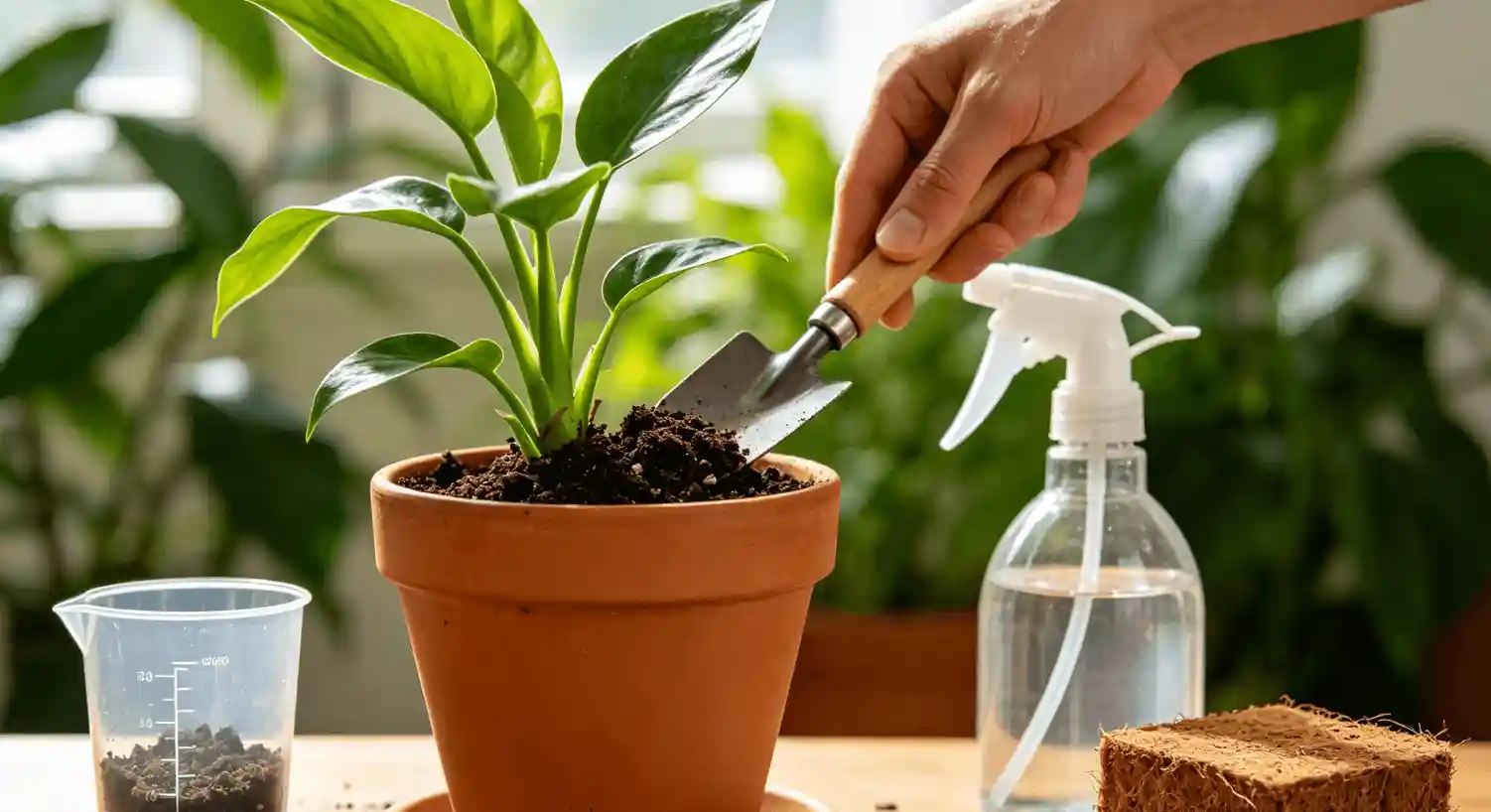
Standing over a dry plant with that watering can in my hand used to make me pause every time. How much water should I pour? When is the right moment to water again? Those questions hit hard. The generic reply of “it depends” always left me stuck, unsure how to move forward without clear rules to follow.
From what I have seen over years of keeping houseplants, the seasons mess with everything. Bright summer sun fuels fast, active growth, so every plant drinks far more frequently. Winter slows metabolism dramatically, and suddenly that reliable weekly watering routine falls apart completely. Natural light fades, indoor temperatures shift with heaters and drafts, and static schedules stop working. A fixed routine such as watering every Sunday works well for a while, until one season flips and the same habit begins harming your foliage.
The real fix comes from checking conditions directly instead of following rigid timetables. I push my finger into the soil down to the second knuckle. If the medium feels cool and clumpy, with damp particles sticking to my skin, I leave it alone for now. When it feels dry and crumbles cleanly away from my finger, it is time to add water. Most tropical houseplants respond perfectly to this simple check. Succulents are an exception. They prefer soil to dry out much deeper, so for them I probe further down, or simply lift the pot to judge moisture levels by weight.
That weight-lifting trick surprised me at first with how reliably it works. Right after a thorough watering, the pot feels solid and heavy, filled with moisture trapped inside soil. A few days later, as water evaporates and roots absorb moisture, the container grows noticeably lighter. Over time, you start to sense this difference without overthinking. The contrast between wet and dry pots becomes obvious quickly. Best of all, this method outperforms cheap gadgets that deliver inconsistent readings based on where you insert the probe. I trust my own hands far more now.
But the way you actually pour the water matters just as much as knowing when to start. A quick splash across the surface never sinks deep enough into the pot. Roots remain trapped near the top layer, constantly chasing small amounts of moisture and developing weak, shallow systems. Instead, I pour slowly, bit by bit. I allow each small addition to fully sink in before adding more liquid, continuing until clean water steadily flows out of the drainage holes at the bottom. Then I wait roughly fifteen minutes and dump all the water that pooled inside the tray underneath. Roots sitting continuously in leftover standing water lead to root rot faster than most beginners realize. I have lost several healthy plants this way long before I understood this critical step.
Sometimes old compacted soil pulls away and shrinks from the pot sides. When this happens, poured water instantly carves narrow channels straight down the gaps without properly soaking the root zone. Bottom watering fixes this issue pretty well. I set the entire pot into a shallow pan filled with a couple inches of water. After twenty minutes or so, capillary action draws moisture upward, and the soil surface turns evenly moist. It delivers uniform hydration without messy runoff and avoids dry pockets deep underground.
Soil itself does a ton of the heavy lifting when it comes to successful watering. Potting mix gradually packs down tight after a couple growing seasons. Organic fragments decompose and break apart, eliminating tiny air pockets roots need to breathe freely. You end up with dense, waterlogged soil even if you stick to what feels like a sensible watering schedule. That connection took me a long time to recognize. It felt incredibly frustrating looking back, watching plants struggle while I repeatedly adjusted watering frequency without realizing the growing medium was the core problem.
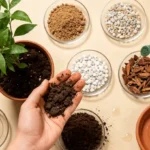
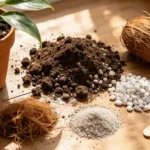
Good, functional potting mix stays loose in your fingers. Grab a handful and squeeze firmly. If it forms a tight wet ball that holds its shape, the blend is too dense and retains excess moisture. It is time to mix in coarse perlite, orchid bark, or gritty sand to improve airflow. The ideal mixture crumbles apart easily into loose separate pieces when you release pressure, nothing like heavy compact garden dirt dug straight from outdoor yards.
Different varieties require customized blends though. Monsteras thrive in chunky soil mixed with large bark fragments to create consistent air pockets around thick roots. Cacti need a grit-heavy combination, mostly sand and perlite with barely any organic material, so the medium dries rapidly. Ferns do better with a blend that retains gentle moisture yet never stays saturated for days. The most common mistake new growers make is treating every pot and every plant with identical soil and watering habits.
If water sits stagnant on the soil surface for ages before sinking, or rushes straight through the pot in mere seconds, that signal tells you the soil structure has broken down, rather than indicating flaws in your watering timing. A stale musty odor paired with fungus gnats, or a plant that wilts constantly even in damp dirt, means the root zone has stayed overly soggy for far too long. In these cases, inspect the root system immediately. Whatever you do, resist adding more liquid.
Water and soil always work hand in hand in practice. Get the growing mix matched properly for what you are growing first. Then simple finger tests and pot weight checks establish your natural watering rhythm. Once this whole system clicks into place, watering turns into something automatic. You tend to plants casually while moving around the home without that old lingering anxiety. It goes to show how these quiet, unglamorous simple habits steadily add up to healthier greenery.