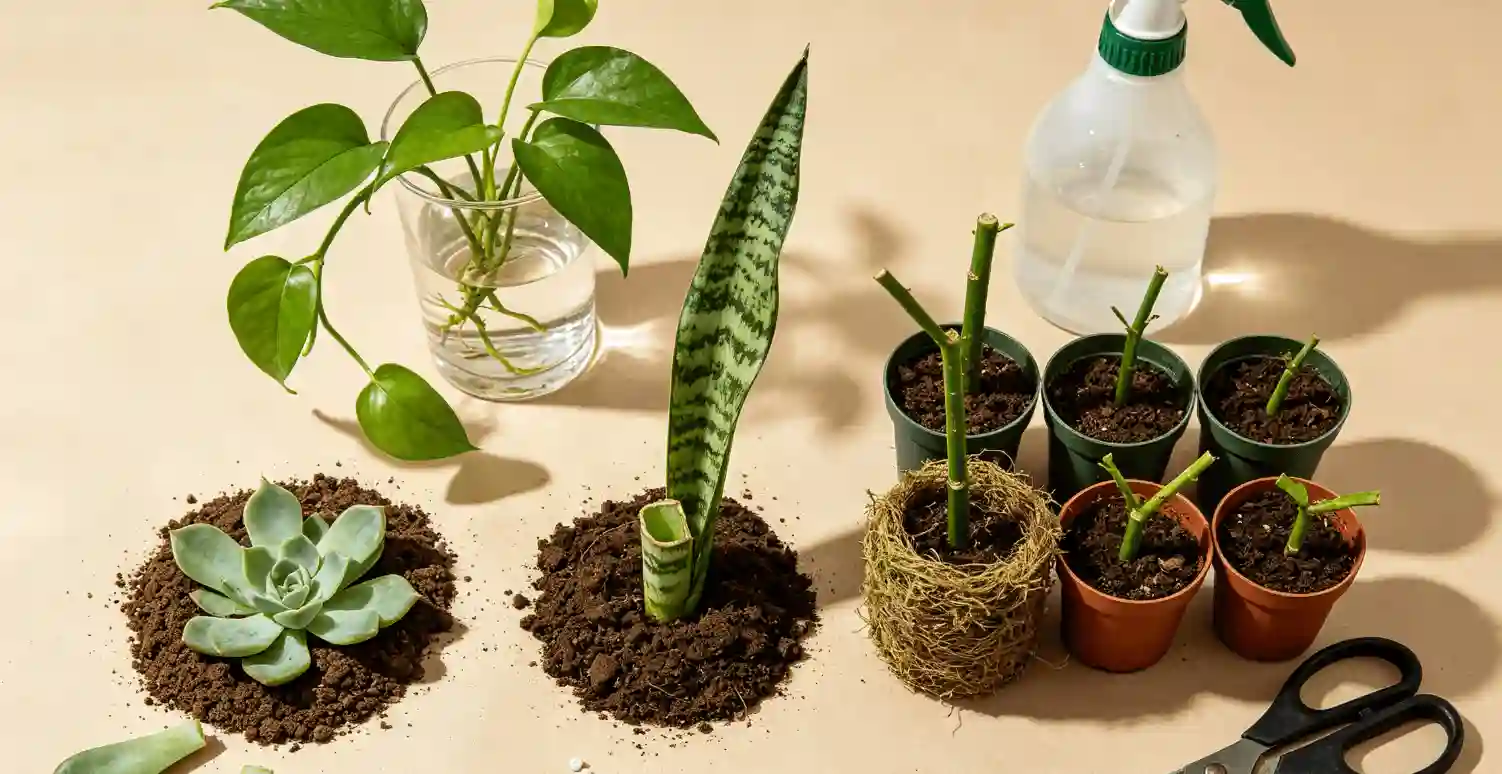
That cutting just sat there. Week after week with zero visible progress, or it slowly went soft and turned to mush, a frustrating cycle that used to drive me nuts. From what I’ve seen over years of propagation attempts, the failures teach you plenty more than the easy wins where cuttings root in ten days flat. Every stalled or rotted stem holds a quiet lesson most beginner guides skip over.
The interesting part is how many people overlook the node completely. New roots do not pop up randomly anywhere along a stem. They rely entirely on that distinct joint where a leaf or aerial root once connected to the main vine. If you make your cut in the bare middle of an internode, far from any node, the cutting can remain green and firm for months without growing a single root. No node, no roots. The rule is as simple as that. You would assume any healthy chunk of stem would sprout new growth, but that is not how plant regeneration works. Checking for a clear viable node first saves a ton of wasted patience and time. I still recall one cutting that baffled me for a solid month before I realized my initial cut had completely missed the critical node.
The age of your cutting also makes a massive difference in practice. Older, woody stem sections taken low on the parent plant contain far fewer actively dividing cells that generate new roots. They stall indefinitely or take painfully long compared to fresh, flexible new growth from upper branches. Last summer, a tender young stem rooted in barely two weeks, while an aged woody cutting harvested from the exact same plant just lingered with zero new development. The gap in progress stemmed from the cutting itself, not flawed lighting, water or any other mistake in my setup.
Rot constantly races against root formation nearly every single time. Both decay and new growth thrive in warm, damp environments. A cutting left in stagnant, unchanged water will quickly develop slimy bacterial film, and any submerged leftover leaves break down, clouding the jar and contaminating the stem. The stem itself sends clear warning signals. A healthy cutting stays firm and pale green at its base. A failing one darkens to brown or black, turning mushy and releasing a faint sour smell. Once rot spreads up the stem to this stage, the cutting cannot recover. Your best move is trimming back firmly above all rotted tissue to healthy growth, starting fresh, and refreshing the water every couple days instead of letting it grow stagnant.
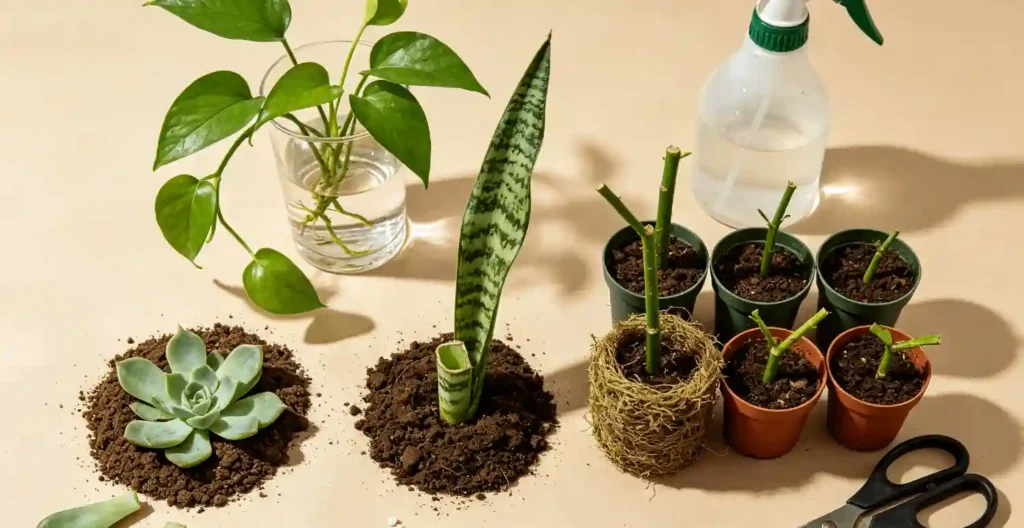
Winter slows everything down, even for plants kept fully indoors. Houseplants naturally react to shorter daylight and cooler surrounding temperatures by hitting pause on active growth, and any cuttings you harvest during this dormant phase inherit that sluggish rhythm. A cutting that would develop strong roots within three weeks during peak summer growth might require six or eight weeks in January, even when every condition stays identical. Supplemental LED lights can gently encourage faster development, but patience becomes your most important tool. The common trap is expecting identical rooting speed year-round, when seasonal shifts rewrite all those informal timelines.
Timing the transition from water to soil trips up new propagators far more than anyone anticipates. If you transplant too early, while roots remain short, translucent and lacking tiny absorbing root hairs, the cutting often stalls badly or dies. Delicate water-grown roots struggle to adapt immediately to firm potting mix. On the other hand, if you leave the cutting floating in water for months after sturdy roots emerge, the plant adapts fully to aquatic conditions, and moving it into soil triggers severe transplant shock. Generally speaking, roots that stretch one or two inches long, thick and opaque, mark the ideal sweet spot for making the switch.
I now take several cuttings at once from any healthy plant with spare growth to share. Not every single specimen will succeed, and that natural risk is normal, rather than proof you messed up basic steps. One might fail due to poor node placement, another falls victim to unexpected rot, yet the rest still hold a strong chance to thrive. Every loss carries useful information if you examine it honestly. Was the parent plant stressed from poor light or lack of nutrients when you took the cutting? Did you fail to refresh the water regularly? Or was it simply the wrong season for that particular species to root easily? Holding onto those observations makes every future attempt noticeably more reliable. It goes to show propagation only grows easier once you stop viewing failure as a final dead end, and start treating each setback as guidance for the next round of cuttings.