My friend sent a photo last month. Her calathea had leaves curled tight like little cigars. She texted with the usual worried question: Is it dying?
That exact question pops up constantly among new plant owners, yet on its own it rarely leads to clear answers. What actually matters is tracing what shifted in the surrounding environment a few weeks earlier, because delicate foliage plants such as calatheas thrive entirely on steady consistency. Alter one key condition, and visible trouble will not appear instantly; stress symptoms creep out slowly over time. The interesting part is how often the solution hides plainly within that timeline, if you slow down long enough to search for clues.
I tend to work backward from the moment I first spotted the issue instead of jumping straight to scrolling through online symptom checklists. Those rushed internet searches waste plenty of time. They serve up dozens of vague possibilities that rarely match your unique home setup. So I start by retracing recent changes. Did the plant get shifted even a short distance chasing brighter sunlight? Light intensity impacts foliage harder than most people expect. A spot that worked perfectly for months can trigger curling or leaf drop quickly once you slide the pot across the room. Or perhaps indoor heaters turned on for the season and steadily stripped humidity from the air. Adjustments to fertilizing routines can spark stress too. Skipping feedings through active growing months then overloading the plant with nutrients all at once builds adverse reactions gradually. Repotting brings its own shock as well. Disturbed roots need time to settle into fresh soil, and the plant may look visibly unwell while it recovers.
Her calathea turned out to have a heating vent blowing continuous dry air directly onto its leaves after the living room furniture was rearranged. No pests, no fungal disease, no rotten roots. Just that single unnoticed environmental shift throwing the whole plant off balance.
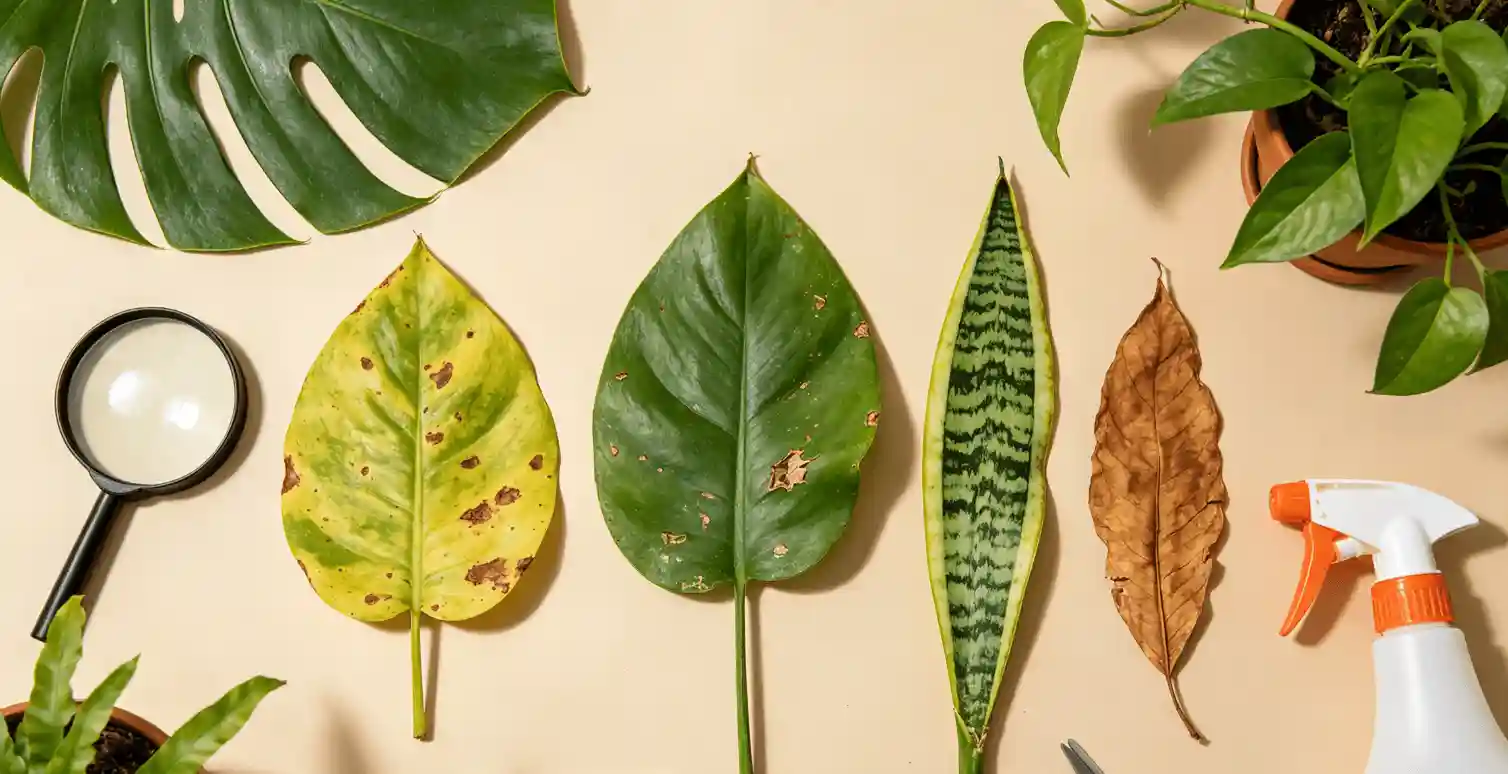
Before you rush to grab sprays, fertilizer or fresh soil, a few simple observations cut down on costly wrong turns. If only one single leaf declines, it rarely signals a systemic crisis. A pet may have knocked it, or that individual leaf simply reached the end of its natural lifespan. When the whole plant behaves out of sorts, the root cause usually ties back to watering, lighting conditions or damaged roots. Distorted, weak emerging new growth means whatever stresses the plant remains active right now. Meanwhile, older foliage fading while fresh leaves unfurl healthy often amounts to natural aging, or points to a problem that has already resolved on its own. Visual patterns reveal volumes too. Uniform yellowing spreading evenly across multiple leaves suggests root trouble or flawed daily care. Random scattered blemishes and damage are far more likely to stem from pests or repeated knocks against furniture.
Things turn complicated when multiple stressors pile onto a plant at once. A specimen weakened by weeks of overwatering develops compromised, soft roots. Fungus gnats move in shortly afterward, and their larvae add further strain underground. Suddenly you appear to face three separate emergencies simultaneously. The natural instinct to apply every possible fix immediately usually backfires badly: repotting, spraying pesticides, adding nutrients and relocating all in the same week. A stressed plant can only tolerate limited disruption. Not only will you never tell which intervention made a difference, those constant adjustments often create worse complications than the original issue. It is smarter to identify and tackle the core trigger first. Water and light govern nearly everything else for houseplants. Make one targeted adjustment, then wait a week or two before testing additional treatments.
Certain plant species easily mislead caregivers if you are unfamiliar with their inherent quirks. Peace lilies flop completely as if they are beyond saving, even when soil is only moderately dry. They perk back up rapidly after watering, earning them a reputation for dramatic overreaction. Fiddle leaf figs shed leaves at almost any minor disruption. A cold draft, small tweak to your watering rhythm, or moving to another room can trigger leaf loss, which makes pinpointing the exact source of stress incredibly challenging. Calatheas stand apart because they react far more strongly to tap water minerals and sudden humidity swings than strict watering timetables. Crispy leaf edges on a calathea typically call for filtered water and extra ambient moisture, not a full overhaul of your entire care schedule.
From what I have observed, learning these species-specific tendencies ahead of time eliminates loads of unnecessary guesswork. You stop treating every brown tip, curled leaf or yellow patch as identical trouble signals across every different houseplant.
True prevention, however, relies on consistent, intentional attention. Observe your plants regularly, not just with a quick passing glance on the way to the kitchen. Bend down to examine leaf surfaces, push fingers into the soil to test moisture, and carefully watch how new growth develops week over week. Most mysterious plant problems begin as tiny, easy-to-fix changes you could catch early if you stay attentive. This plant detective work grows far simpler once you keep track of your plant’s ongoing story rather than scrambling to diagnose symptoms after damage spreads. It goes to show that steady daily observation matters far more than any printed care chart or online troubleshooting guide.