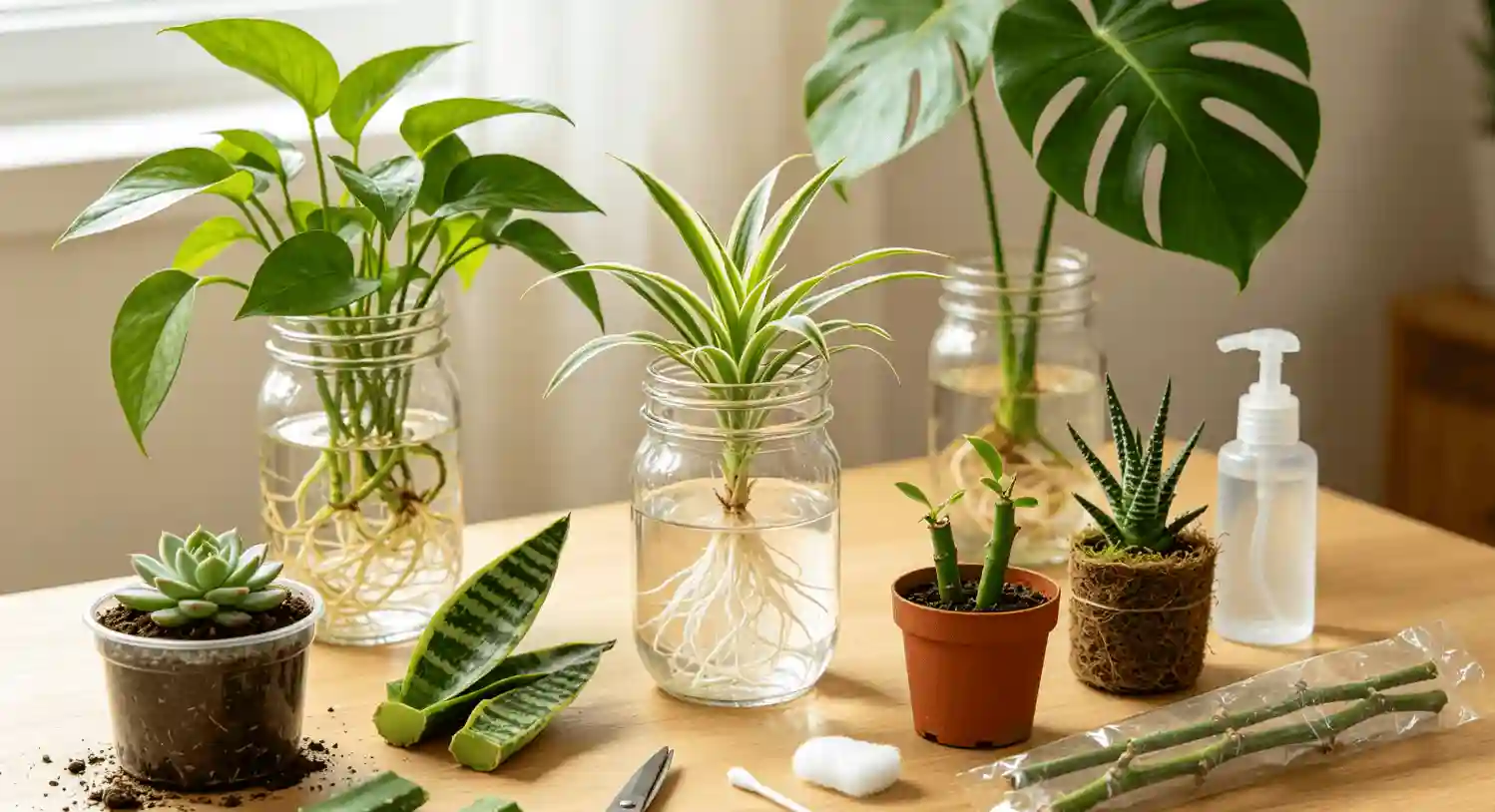
My pothos was taking over the kitchen floor. So I hacked off a leggy piece. Shoved it in a mason jar of water instead of the trash. Then I completely forgot about the cutting sitting on the counter. Two quiet weeks passed with barely a second thought. When I finally glanced over, delicate roots appeared. Thin white threads dangling beneath the stem like sprouting was the most ordinary thing in the world.
That quiet moment taught me everything I know about propagation. Plants have perfected this natural cloning ability for millions of years long before gardeners stepped in. Real skill comes down to knowing when to step back and avoid interfering too much. Still, I messed up countless attempts at the very beginning, crippled by my own lack of patience. I would check on cuttings multiple times a day, tug stems to search for roots, and transplant them far too soon. Time and again I watched newly forming growth struggle, turn mushy, and rot away. Looking back, it was such an unnecessary waste of healthy plant material.
Division completely changed my approach once I discovered this straightforward method. Unlike stem cuttings, you do not need to wait for brand-new roots to develop from scratch. Carefully lift out clumping varieties such as snake plants or peace lilies from their pots. Scan the root ball for natural gaps where the plant already separates into distinct sections. Every segment you split away already carries established stems and functioning roots. Gently tease tangled roots apart with your bare hands. If thick roots weave tightly together, a sanitized knife can ease them free without tearing tissue. Pot each divided section into fresh soil separately. Fresh new leaves emerge surprisingly fast, often within just a week or two. From what I have observed, this method outpaces other propagation techniques that can drag on for months. It works beautifully for spider plants, ZZ plants, and many succulents that sprout tiny offset pups around their base.
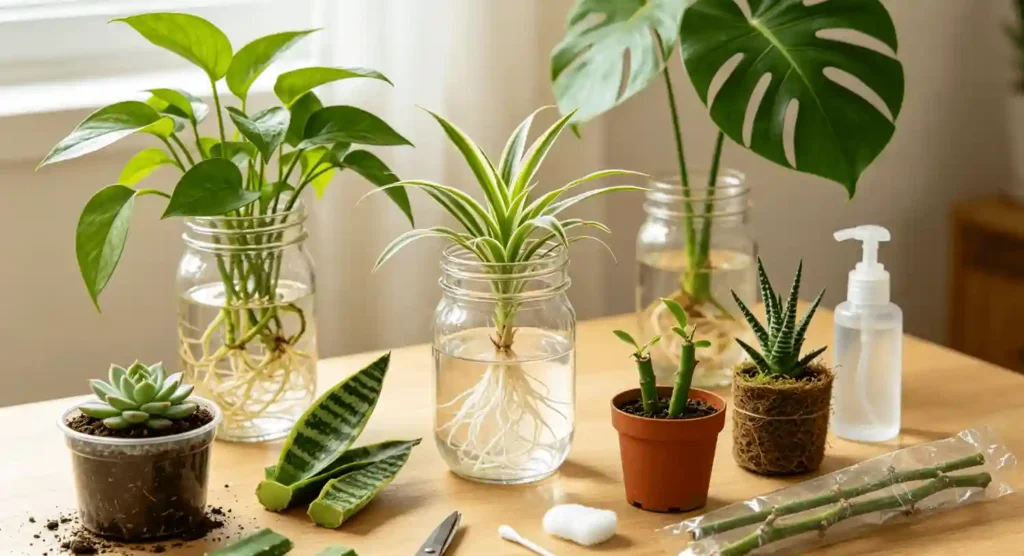
Water propagation marked the next step along my learning curve, and it remains the first method most new hobbyists test. It is easy to understand, costs nothing extra, and lets you witness every change through the walls of a clear glass jar. It works wonderfully for all vining varieties that grow obvious nodes: pothos, heartleaf philodendron, tradescantia, and trailing ivy. Always make your cut directly below a node—the small bump where leaves connect to the stem. This detail is critical; without a viable node, roots will never grow. Strip off any lower foliage that would sit submerged underwater, as trapped leaves quickly decay and spoil the environment. Refresh the water regularly to stop bacteria and algae from building up. Set the jar in bright indirect light; harsh direct sunlight heats the water rapidly and damages fragile new growth. Roots generally emerge within several weeks. Hold off on transplanting until those white roots stretch an inch or longer. Moving cuttings into soil too early sets back their development drastically.
Some varieties thrive best when placed straight into soil rather than water. Succulents are the perfect example. Allow fresh cut surfaces to dry out and form a firm callus for one or two days. Raw open wounds rot almost instantly in damp growing medium. Lay prepared leaf cuttings gently on top of loose, well-draining mix. Mist the surface lightly every few days, but hold off on heavy watering until roots take hold. Snake plants adapt well to leaf cutting too. You can slice one full leaf into multiple segments and plant each piece upright in soil. A single leaf has the potential to grow several baby plants. One caveat: variegated snake plant cuttings usually lose their patterned markings, growing into plain solid green foliage. Rooting hormone powder boosts success rates for stubborn, slow-growing stems. Simply dip the trimmed end before planting to speed root formation. It is unnecessary for easy varieties, yet an incredibly handy tool for trickier specimens.
Then there are the notoriously difficult plants. Fiddle leaf figs and rubber plants often fail to root from ordinary stem cuttings. Air layering solves this struggle brilliantly. You encourage new roots to grow while the stem remains attached to the healthy mother plant, giving the new section a far stronger head start. Slice partially through a mature sturdy stem, cutting at an upward angle. Wed a clean toothpick inside the slit to keep it open. Pack damp sphagnum moss all around the wound. Wrap the moss tightly with clear plastic film and seal both ends to lock in moisture. Unwrap briefly once a week to mist the moss. Over a month or longer, roots grow inside the wrapping, and you can watch them form through the transparent plastic. Once the root network looks dense and solid, cut the stem free from the parent plant and pot up your new specimen. This method drastically improves survival odds for temperamental woody houseplants.
The unifying rule across every propagation technique stays unchanged: impatience ruins far more attempts than dull scissors or imperfect lighting. Give nature enough time to do its work. Clean, sharp cutting tools reduce damage to plant tissue and lower infection risk. As you practice repeatedly, you slowly develop an eye to recognize exactly when a cutting or division is ready to be moved. Even after years of propagating plants, I still get a quiet thrill every time I spot those first delicate roots emerging. It goes to show how little human intervention we truly need. Most of the magic simply belongs to the plant itself.