My radiator sat right under the only window. Made things tricky from day one. Four hundred square feet with soft north light and constant heat blasting upward from below is not a kind setup for any houseplant. I wasted cash on ill-suited, doomed purchases before everything finally clicked into place. The interesting part is how most online plant guides seem written for someone with a spacious open loft and abundant sunlight flooding in from three directions. Plenty of us scrape by in tiny studios or one-bedroom apartments, bound by rental leases that hammer home the “no holes in walls” rule as a strict, non-negotiable term.
None of these limitations block you from building a thriving plant collection though. You simply adjust the whole plan. What stands out to me after years of gardening in tight rental homes is how most new plant owners only fixate on limited floor space, while blank walls and empty ceiling areas sit completely ignored. So I decided to build upward. Tension rods are the unsung hero of renter plant setups. Jam one securely between two opposite walls near whatever natural light you can access. Add sturdy S-hooks to hang trailing plants. No drilling, no permanent damage, no awkward conversations with landlords. It is wonderfully simple. Heavy-duty Command hooks mounted on ceilings deliver the same functionality, but always double-check their official weight ratings. A fully watered ceramic pot grows surprisingly heavy, a lesson I learned after a frightening near disaster when a hook threatened to pull loose.
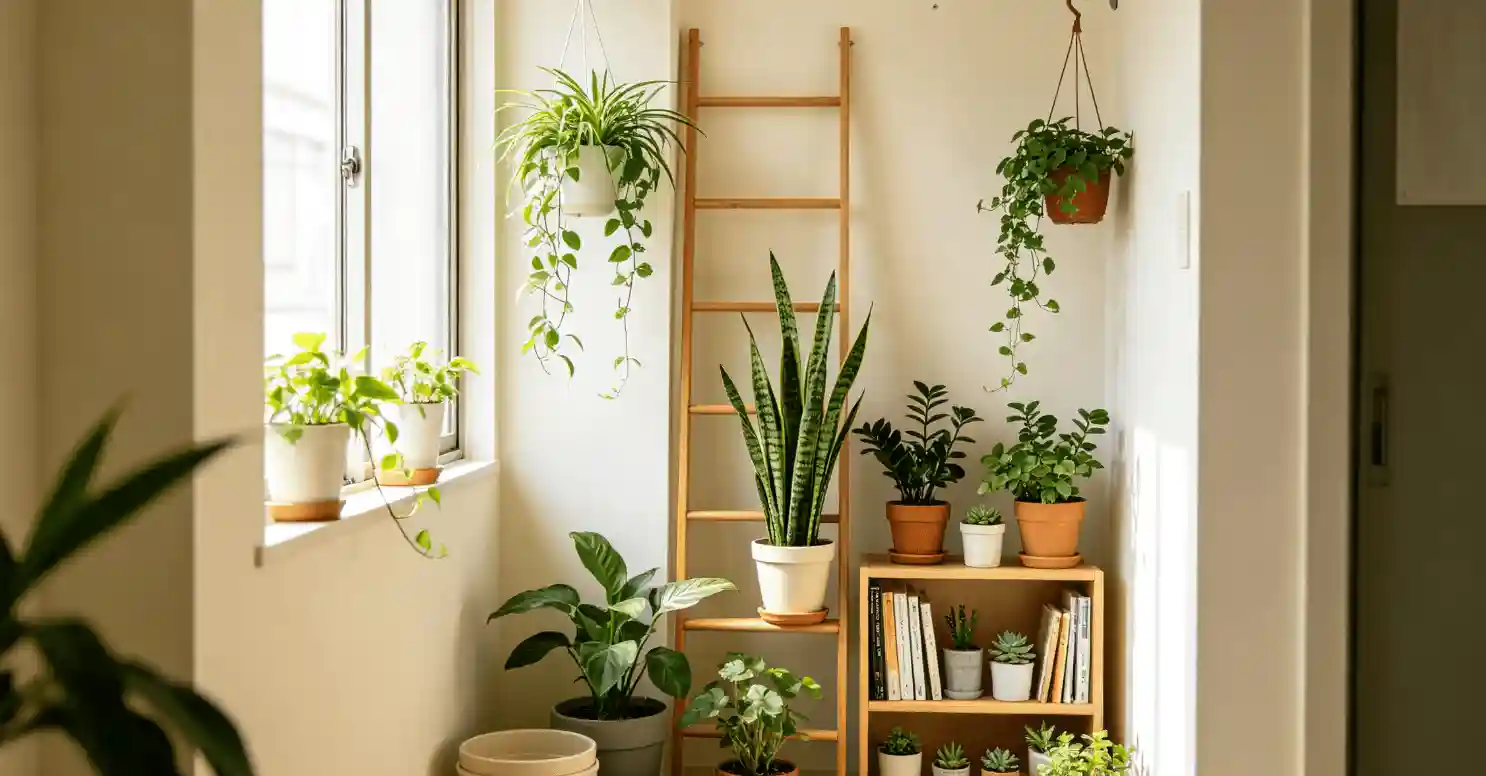
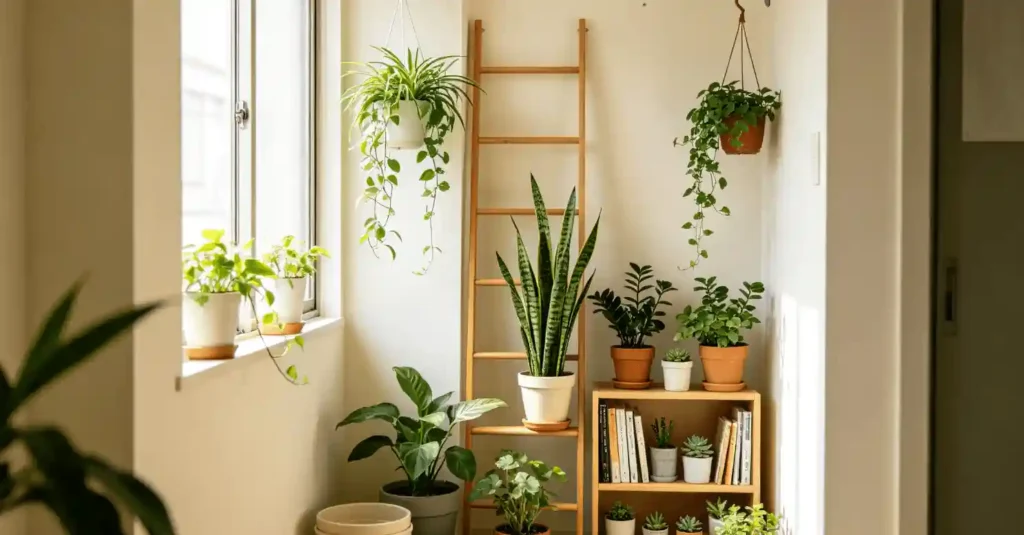
Clamp-on shelves and tension-mounted units fit neatly without any screws and let you stack plants vertically. Leaning ladder-style shelving that rests against walls rather than mounting directly works perfectly; it looks like intentional home furniture even before you arrange pots across its tiers. These pieces create extra growing layers without leaving lasting marks on paint or drywall.
Pothos turned into my most reliable pick pretty fast. It puts up with low light, irregular watering and casual neglect far better than most common houseplants you can buy. Its long vines trail gracefully from shelves or hanging fixtures, keeping valuable floor space open for other belongings. Snake plants grow straight upright, which keeps their physical footprint tiny. They tolerate that dim northern window exposure with barely any fuss. ZZ plants bring beautiful glossy foliage to match that same tough resilience and forgive longer stretches of forgotten care. You would think adding visual interest would demand more usable room, but a trailing philodendron or string of pearls suspended in a hanging basket creates a striking focal point by utilizing empty vertical airspace you were not putting to use anyway. Pileas stay compact and neatly rounded, fitting comfortably on narrow windowsills where sprawling varieties would constantly knock over lamps and decor.
As for those popular large statement plants, though—the fiddle leaf figs and monsteras that dominate social media photos. They usually crave far brighter light and ample breathing room than most small rentals can offer. One specimen positioned near your brightest window can work out okay with consistent care. Trying to squeeze several large ones into limited quarters tends to leave you with a crowded cluster of struggling foliage. It rarely feels worth the money and effort from what I have observed.
The single-window living reality presents challenges that picking hardy survivor varieties alone cannot solve. Tough plants can hang on, yet they rarely look lush and vibrant long-term. A small clip-on grow light that fastens onto shelf edges without extra tools offers meaningful support. Most affordable options cost less than purchasing another mature plant from a local shop. Position it carefully, just a few inches up to one foot away from leaves at most; light intensity drops off rapidly with distance, even if your eyes cannot easily notice the difference. Simple mirrors also bounce existing natural light deeper into the room for free. Angle one across from your window, and corners ten feet away that would normally stay dim grow noticeably brighter.
Furniture must pull double duty in these compact setups, or it merely wastes precious square footage. A tall plant stand with open space underneath lifts pots off cramped floors while concealing spare potting mix, watering cans and other messy supplies you prefer to keep out of sight. Bookshelves transform their top tiers into extra plant layers with zero added footprint. Even radiator-top shelves, designed to protect window curtains from heat, become valuable plant real estate for varieties that enjoy mild warmth. Just elevate pots slightly on small risers so their roots never rest against surfaces growing hot.
Renters tend to pack up and relocate more frequently. A large plant collection can quickly feel like cumbersome dead weight when lease renewal time arrives. The solution is not cutting back on how many plants you keep. Instead, choose varieties and flexible systems that travel light. Lightweight plastic nursery pots replace bulky heavy ceramic containers to make moving far less painful. You can swap plants into decorative outer cachepots once settled in a new apartment to restore that polished look quickly. Tension rods and adhesive hooks come down within minutes and can be reinstalled the same afternoon at your new address, leaving no holes to patch or repair.
You learn to work with the space you actually have, no matter how dim or awkward its layout might be. One decent window, a mindset focused on vertical growing, and a carefully chosen handful of forgiving plant varieties go much further than most beginners expect until they test this approach themselves. Turns out that combination is usually more than enough. I still remember how shocked I felt the first time my whole compact plant arrangement came together smoothly despite all the obvious disadvantages. There is something deeply satisfying about making greenery thrive against the odds.