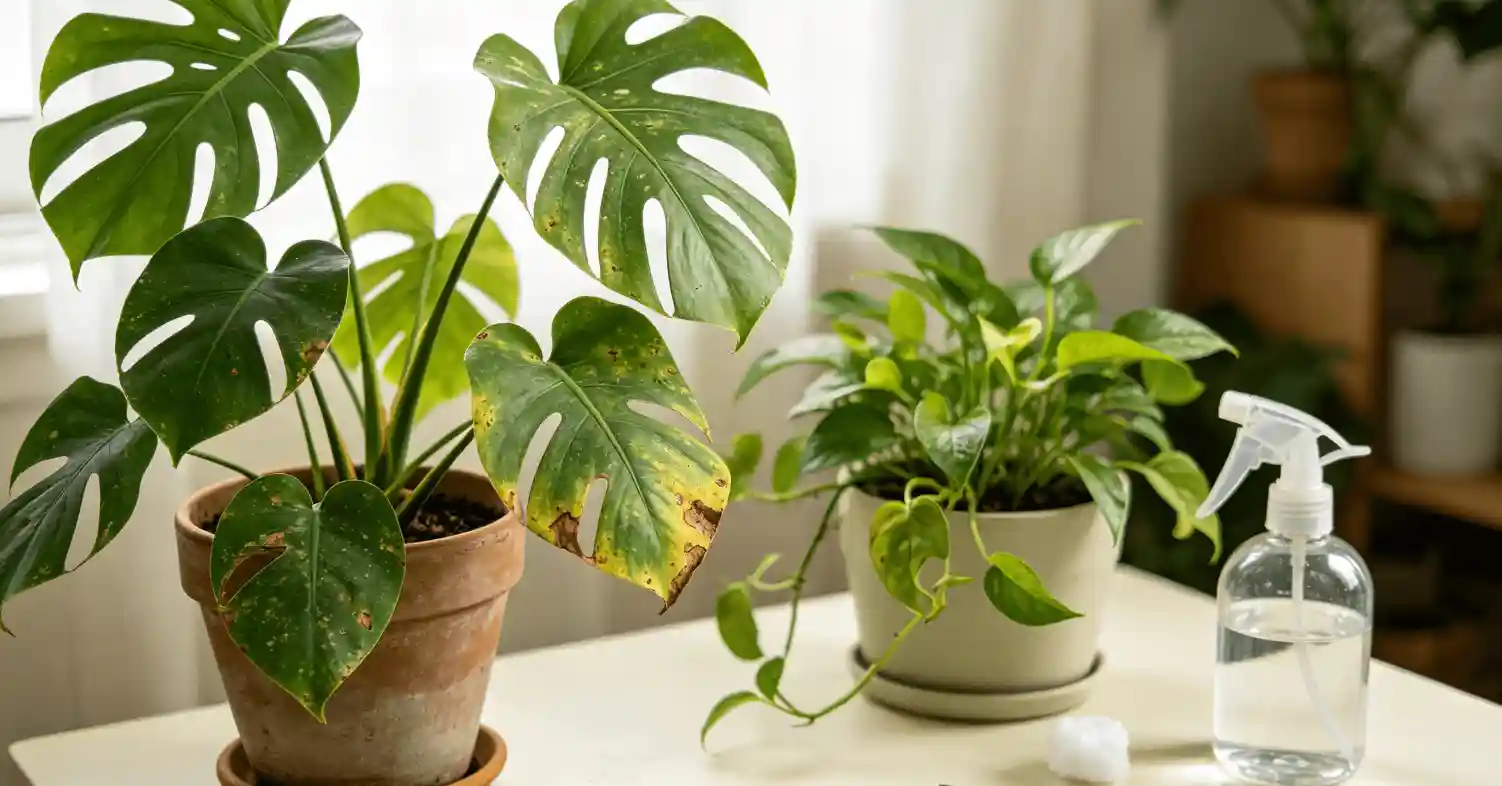
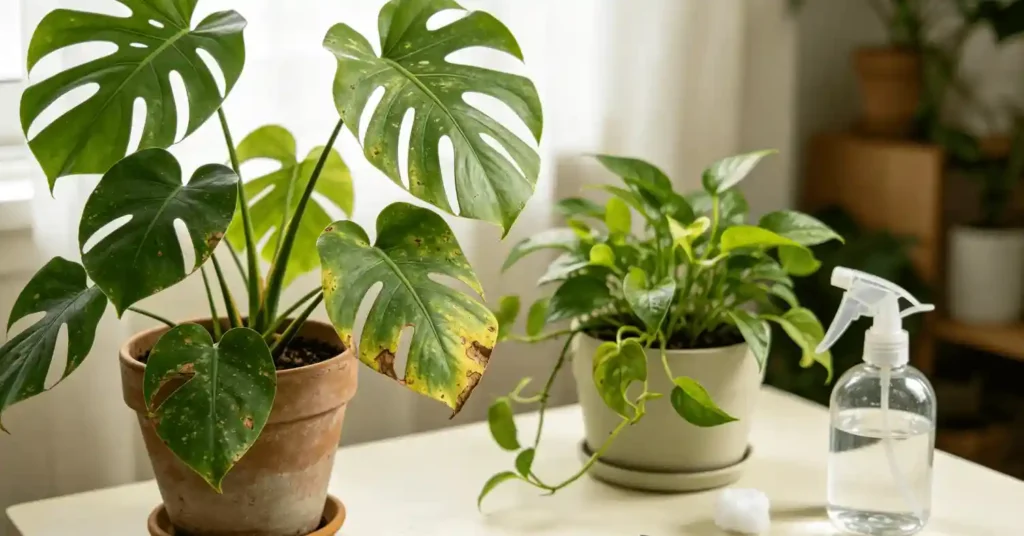
Your monstera turns on you one Tuesday. You walk past it and freeze because that leaf looked fine days ago. Now it carries a brown center ringed in yellow while fresh growth curls instead of opening flat. You scroll plant forums hoping for answers, yet forums rarely help right away since the top reply always stays vague without clear photos and context about your home environment.
From what I have seen, most common houseplant headaches cluster into the same few repeating patterns. This is not an exhaustive pest and disease textbook filled with obscure problems. It focuses on the issues that actually pop up in regular residential homes and the order most new plant owners encounter them as they learn to care for foliage.
Leaves tell the real story of a plant’s condition. People reach for the watering can first almost on instinct whenever something looks wrong, but that impulsive reaction often misses the point entirely. A plant records every stressor of the past weeks right there on its foliage, so learn to read those visual clues before you adjust your care routine.
Yellow starting low on older leaves and moving upward slowly usually means the plant is shedding foliage it no longer needs to support. This is totally natural, especially when shorter daylight in winter slows overall growth. Losing one or two lower pothos leaves every month or so is never a crisis; it is simply natural aging. No extra water, fertilizer or treatment is required here.
New growth turning yellow, or discoloration spreading rapidly across the whole plant, tells a completely different story. The root system is most likely struggling underground. The key difference to learn: leaves damaged by overwatering turn soft, limp and almost translucent before they drop, while underwatered foliage crisps gradually inward starting from the edges and tips. Lift the pot to confirm your guess. A heavy pot means trapped excess moisture; a lightweight pot signals dry soil deep down.
Brown crispy edges with no surrounding yellow tissue almost always trace back to air conditions. Low indoor humidity, constant drafts from air vents, or mineral salts building up from repeated tap water watering create this symptom. This issue frequently fools beginners because the burnt leaf edges look dramatic, yet it rarely develops into something life-threatening. Simply trim off the dead portion with clean sharp scissors, following the natural curve of the leaf, and continue regular care while slowly improving humidity if you can.
Pests arrive far more often than many new growers guess. Spider mites top the list of sneaky invaders, since they stay nearly invisible until leaves turn sandpaper rough covered in tiny pale speckles. Always check leaf undersides and stem joints for fine, barely noticeable webs they weave. Dry, heated indoor rooms draw them in heavily through the colder months. A thorough shower rinse repeated every few days over two weeks physically knocks mites and their eggs loose, often working better than store-bought chemical sprays.
Mealybugs appear like tiny cotton puffs tucked away in tight stem joints, and they move at a slow crawl. Dabbing each pest directly with an isopropyl alcohol cotton swab clears mild infestations efficiently. Scale insects form hard brown bumps stuck firmly to stems or leaf bottoms, so many people mistakenly mistake them for harmless plant nodules. You must scrape each scale off manually first, then follow up with diluted soap spray, because protective outer shells shield hidden eggs.
Fungus gnats send new plant parents into unnecessary panic. These small flying insects hover visibly around pots, unlike nearly all other common pests. What many do not realize is adult gnats barely harm healthy plants at all. The tiny larvae live and feed within persistently damp topsoil. Let the top inch of growing medium dry completely between waterings, and their breeding cycle breaks apart within a couple of weeks without harsh insecticides.
A surprising number of suspected plant diseases ultimately turn out to be light or watering issues in disguise. Leggy stretched stems with wide gaps between leaves, or new leaves consistently smaller than mature older foliage, are clear signals the plant craves more indirect sunlight. Rotate your pot a quarter turn each week, and growth will become fuller and more even on all sides.
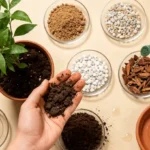
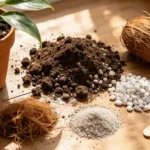
Root rot appears constantly among struggling houseplants. Fungi multiply rapidly in waterlogged, low-oxygen soil. Wilting leaves even when soil stays wet, alongside a mushy stem base right at the soil line, give this problem away instantly. Carefully lift the plant out of its container to inspect roots. Healthy roots stay firm and pale white or tan. Rotted roots turn dark, soft and release a sharp sour odor. Cut away all damaged sections with sanitized scissors, let the remaining healthy root mass air dry for a few hours, then repot into fresh, fast-draining soil. Discard the old contaminated growing medium completely, as it carries lingering fungal spores that reignite trouble.
You do not need to memorize long complicated checklists to catch problems early. A quick visual once-over each time you water does the job perfectly. Flip over several leaves. Examine tight stem joints. Notice whether the soil surface looks compacted or constantly damp. Most plant troubles are simple to reverse if caught early. By the time a plant looks dramatically unwell, you are witnessing weeks of accumulated stress rather than one sudden isolated incident.
I remember the first time spider mites attacked my collection. I fell into total panic, rushing to buy sprays and moving every plant around the house, which only added extra stress.
If you cannot decide whether you are seeing a real threat or just normal leaf aging, the safest strategy is usually to wait a few days and observe closely. Plants withstand far more fluctuation than we expect. Unfortunately, they recover much slower from frantic last-minute fixes: rushed repotting, repeated pesticide spraying, and overfeeding all at once. Patience plus careful pattern recognition solves far more plant mysteries than expensive commercial products ever could. More often than not, the real mistake gardeners make is rushing to intervene before the leaves fully reveal what the plant is trying to communicate.